A sagging door on a reach-in cooler looks like a small problem. You might think it is just a minor nuisance that requires a little extra force to close. This is a dangerous assumption for any restaurant owner in Sacramento or Reno. That small gap at the top of your door is not just letting out cold air. It is actively killing your refrigeration system.
In the food service industry, equipment downtime is the enemy. A broken refrigerator leads to spoiled inventory, unhappy customers, and lost revenue. However, the biggest hit comes from the repair bill. Replacing a commercial compressor often costs $3,000 or more.
Most of these failures are preventable. They do not start in the motor or the electrical lines. They start at the hinges.
The True Cost of a Compressor Failure
When a compressor fails, your kitchen stops. In cities like Sacramento and Reno, where summer temperatures regularly climb into the high 90s and 100s, refrigeration systems are already under heavy stress. A failed compressor in July is a genuine emergency.
Breaking Down the Bill
A typical compressor replacement for a medium-sized commercial unit involves several high-cost components:
- The Part: A new commercial-grade compressor usually costs between $1,500 and $2,500 depending on the horsepower and brand.
- Refrigerant: Replacing the lost or contaminated refrigerant adds hundreds of dollars to the total.
- Labor: This is a complex, multi-hour job that requires a licensed technician.
- Emergency Fees: If the unit fails during a Friday night rush, expect to pay premium after-hours rates.
When you add these factors together, the bill quickly exceeds $3,000. This is a massive, unbudgeted expense that most independent operators cannot afford.

How Sagging Hinges Trigger the Failure
Your refrigeration system is designed to maintain a specific temperature by cycling on and off. It is not designed to run 24/7. Sagging hinges disrupt this cycle and create a "domino effect" of mechanical stress.
1. The Infiltration Gap
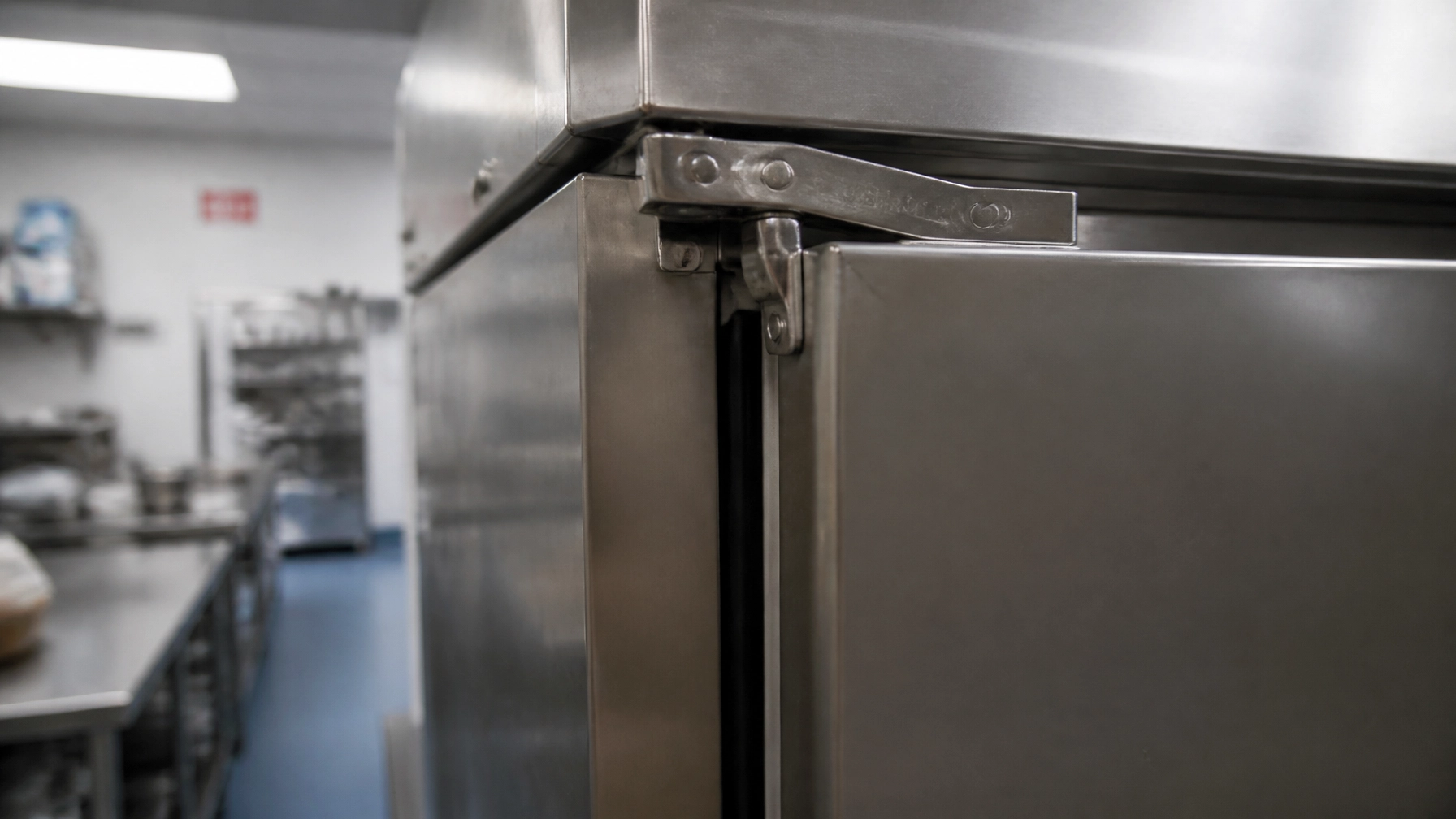
When hinges sag, the door no longer sits square in the frame. Even if you have high-quality gaskets, they cannot seal a door that is physically misaligned. This creates a gap. Warm, humid air from your Sacramento or Reno kitchen flows into the cooler constantly.
2. Continuous Heat Load
The thermostat detects the rising temperature and signals the compressor to turn on. Because the warm air is leaking in at the same rate the cold air is being produced, the temperature never reaches the "cut-out" point. The compressor continues to run.
3. Mechanical Overwork
Compressors generate heat while they work. They rely on the "off" cycle to cool down. When a sagging hinge forces the unit to run continuously, the compressor overheats. Internal lubricants break down. Mechanical parts begin to grind. Eventually, the motor windings burn out or the internal valves fail.
4. The Evaporator Ice-Up
Humid air leaking through a bad seal causes frost to build up on the evaporator coils. This ice acts as an insulator, making it even harder for the system to remove heat. The compressor must work even harder to overcome the insulating layer of ice. This is the final stage before a total system meltdown.
Identifying the Red Flags
You do not need to be a mechanic to spot hardware failure. Inspect your equipment weekly. Look for these specific warning signs:
- The "Double Slam": If your staff has to slam the door twice to get it to stay shut, your hinges or latches are failing.
- Visible Gaps: Look at the top corner of the door on the handle side. If you see light or feel air, the hinge is sagging.
- Moisture and Frost: If you see condensation on the outside of the door or ice forming near the seal, the hardware is not pulling the door tight.
- Noise: Listen to your compressor. If it never seems to turn off, check the door alignment immediately.

High-Quality Parts Make the Difference
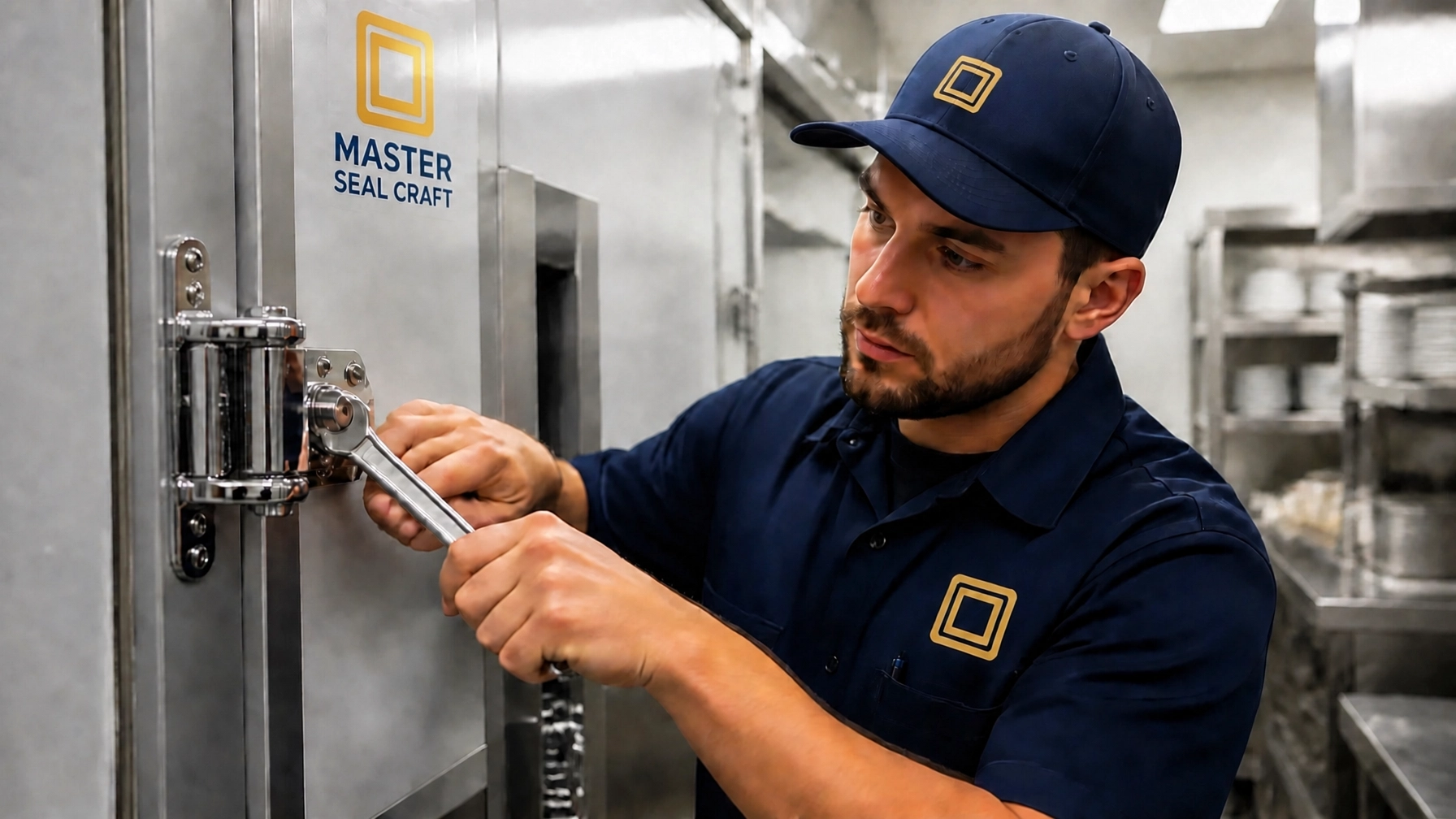
At Master Seal Craft, we do not believe in temporary fixes. If your hinges are worn, we replace them with heavy-duty, longer-lasting hardware designed for high-volume commercial use.
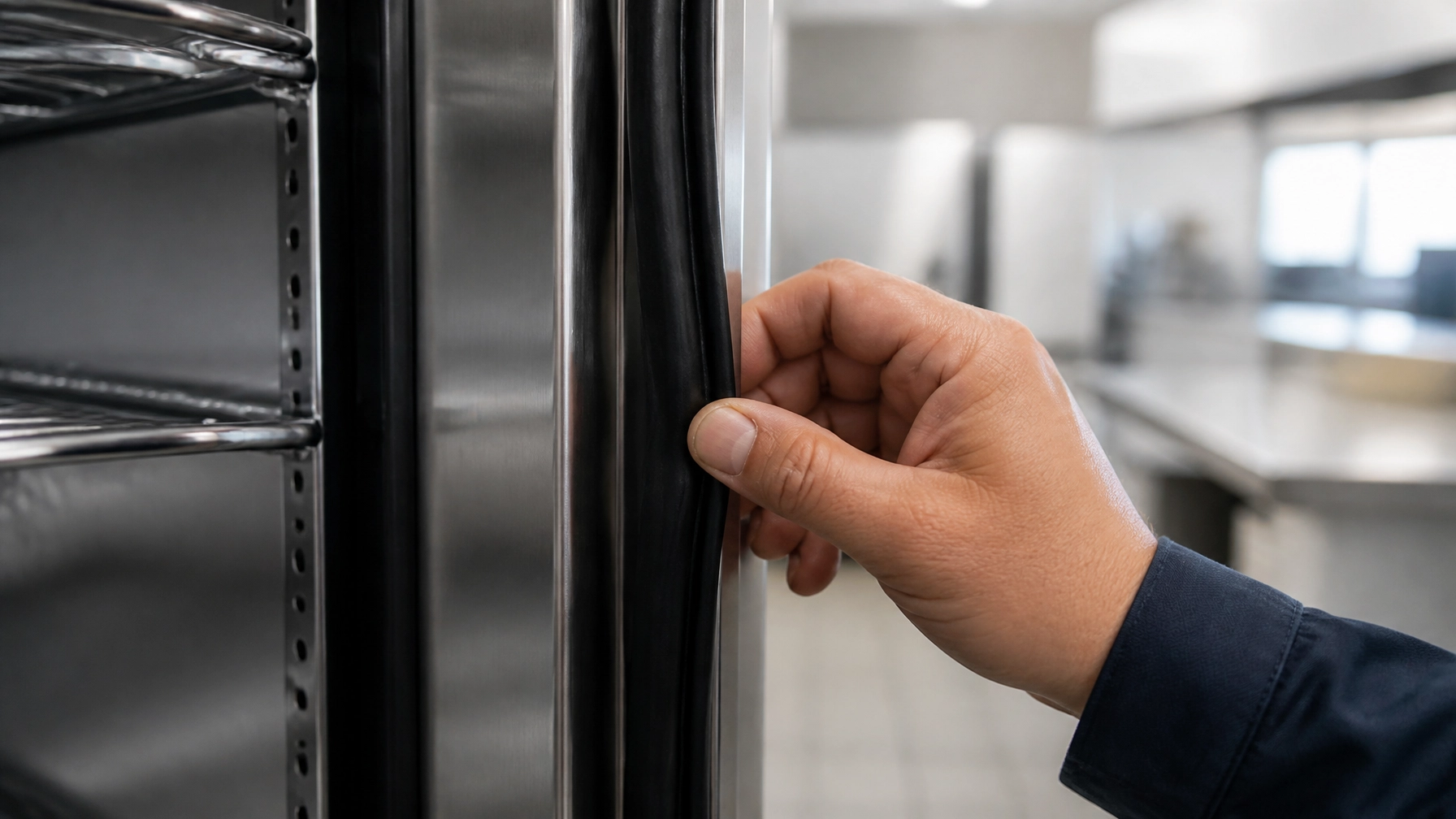
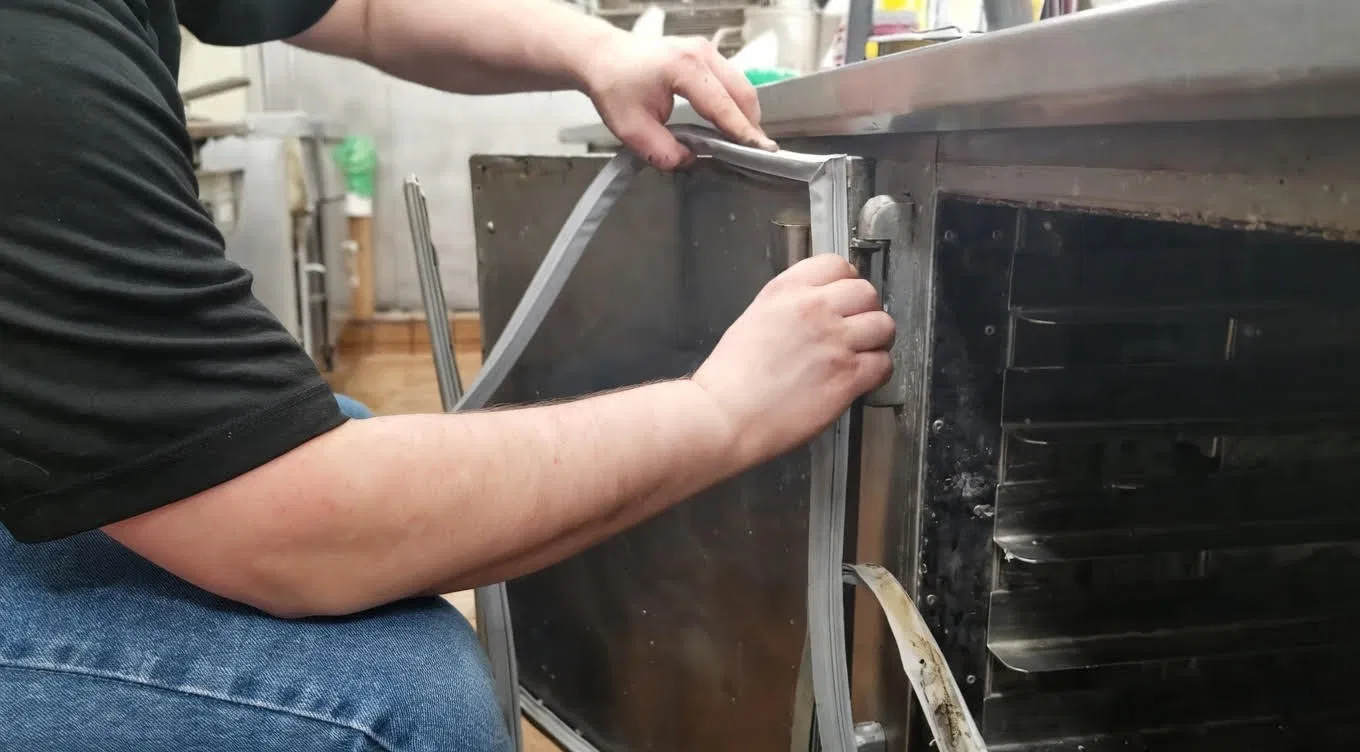
We also specialize in the installation of high-quality gaskets. A high-quality gasket provides a superior thermal barrier compared to cheap, generic alternatives. When we combine high-quality gaskets with properly adjusted hinges and latches, we restore the "Seal Integrity" of your unit.
Our 120-Day Warranty
We stand behind our work. Every hardware repair and gasket installation we perform comes with a 120-day warranty. We provide this because we use superior materials and precise installation techniques. We want you to have peace of mind knowing your $3,000 compressor is protected.
The Seal Integrity Program
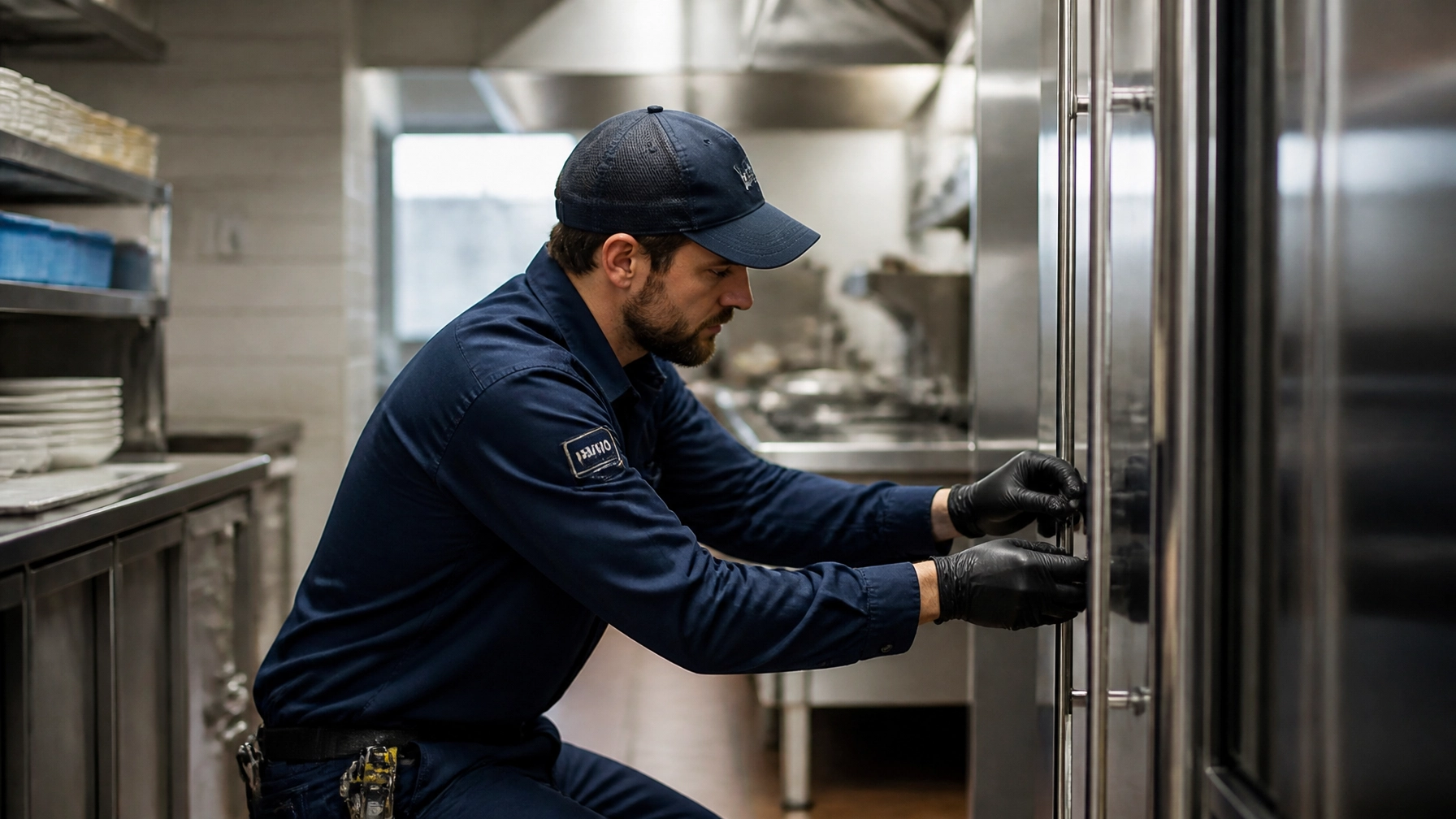
The best way to avoid a $3,000 surprise is through proactive maintenance. Our Seal Integrity Program is designed for busy managers in Sacramento and Reno. We perform scheduled inspections to catch sagging hinges and worn gaskets before they cause a mechanical failure.
During a typical visit, we:
- Inspect All Hardware: We check hinges, latches, and door closers for wear.
- Adjust and Lubricate: We tighten loose screws and lubricate moving parts to prevent sag.
- Verify the Seal: We ensure the gaskets are making 100% contact with the frame.
- Photo Documentation: We provide photo verification of every repair for your records and health department audits.

Take Action Today
Do not wait for your compressor to stop humming. A small investment in hardware repair today can save you thousands of dollars next month.
If you operate a commercial kitchen in the Sacramento, Reno, or Lake Tahoe areas, contact Master Seal Craft. We provide rapid, on-site service to keep your doors closing tight and your energy bills low.
Stop the sag. Save your compressor.

Visit Master Seal Craft to schedule your inspection. Protect your bottom line with high-quality, longer-lasting refrigeration solutions.